

This exclusive piece delves into extraordinary interviews and narratives from around the globe.
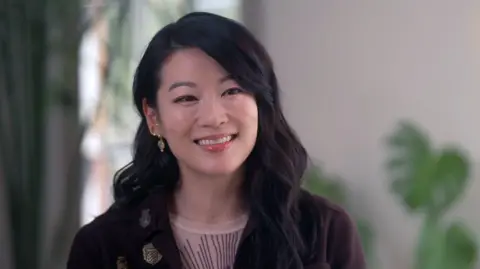
"{I hated that I looked Asian, that I didn't have light-colored eyes and fair hair, because those were the beauty standards back then," says Arden Cho, who portrayed Rumi in the streaming platform's highly successful movie, the K-pop themed animation.
The performer, forty, recalls her early years in Texas, as the eldest daughter of Korean immigrant parents and her journey toward belonging in American society.
In the film, which narrates the tale of a girl group who must save the world from dark powers, the protagonist has to accept her identity as part human, part demon – and when she first saw the screenplay, this resonated powerfully.
"Being born in America, identifying as American but having others view me like a foreigner, grappling with my identity as an Korean-American, as a Asian-American, as a female," she says.
These elements were aspects of her early life that paralleled Rumi's journey.
"Truthfully, at various stages in my existence, I despised many parts of me and I wanted to be a different person.
"During childhood, your surroundings shapes your development and I feel like I just didn't see sufficient individuals that shared my appearance."
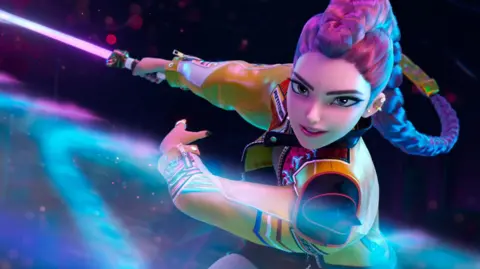
When it launched on Netflix in June, the animated feature achieved millions of streams in just two weeks, and reached the highest positions of the streaming rankings in 93 countries. To be part of the pioneering animation set in Korea, with Korean leads, was for her "an aspiration realized" – but it has also made her a powerful role model for Asian-American children, the type that was missing when she was young.
Cho notes many individuals of Korean descent have told her it's "such a refreshing moment", making them proud for the first time of their mixed background and cultural roots.
"I feel like Korean pop music has genuinely broken barriers. Korean cosmetics has had a significant influence on Korea being loved. But I believe the film is the one that tipped it over the edge, of, inspiring travel to Korea, now," she comments.
But the movie's triumph was uncertain and the actress says she felt the team making it were "sometimes facing an uphill battle".
"It seems it kind of sucks to say this, but any time there's an Asian-led project, people feel like it's a risk," she reveals.
So, when she took on the role, she took steps to connect with the entire cast and crew face-to-face, she says.
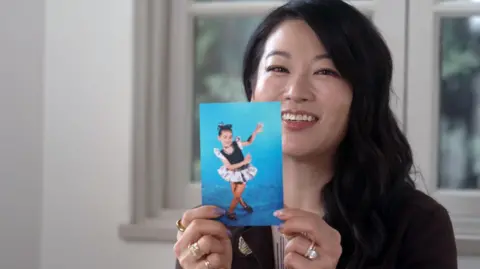
The film was launched against the backdrop of increased immigration raids in the US as part of mass deportation efforts, which triggered demonstrations in numerous regions.
As an Asian-American residing in America "it's heartbreaking and disappointing," she states. "Newcomers have made America what it is."
Reports have estimated that up to 150,000 Korean immigrants lacking legal status, including adopted children, are among those who could be removed.
As an grown-up, Cho understood that the prejudice she had encountered when in her youth stemmed mainly from a lack of education, as people didn't know what it signified to be of Asian descent.
"But now, in this day and age, when I feel like the society and individuals ought to be more informed, it is beyond disappointing and at times I feel like we feel so hopeless," she says.
Due to this, it's particularly meaningful, she says, that KPop Demon Hunters could bring "hope and joy and love to all these different communities".
"Perhaps this explains it became the season's hit film, because we just needed some hope and something to unite us all together."
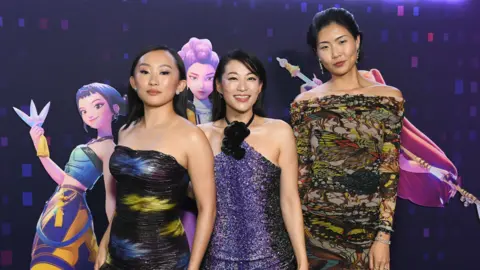
The growth of AI is a major concern for the film industry, creating the potential that in future it could be used to produce a film like KPop Demon Hunters.
The actress says she is conscious that AI is already being used to copy performers' vocals, but wants to "maintain faith in people" that individuals will still pursue human-made creativity.
"Certainly, I believe there will be digital performers and singers. I'm aware they already exist. I understand our voices are already being manipulated, but I hope the public have appreciation and want and love for something real."
The film has also been dominating the global music charts, with seven tracks from its score appearing in the Billboard Hot 100. It has its own fan art, and viewers globally are calling for a follow-up.
She tells us she wishes she could answer the question of whether that will happen – but both she and fans will have to wait for the streaming service or the production company, which produced the movie, to give it the green light.
"I know rumors are circulating, the feedback is positive," she says. "So we shall see, and I believe everyone in the world would riot if it didn't happen."
- Starting conversations, building connections and challenging misinformation through features, in-depth reports, interviews and extraordinary stories


